FE. Rae had a conference zoom-call this morning, so she planned to stay for that. Well, the bobcat jackhammering the concrete right below our room was so noisy, she moved to another location and I explored the small town of Mt Shasta. It is touristy but has an amazing view of the mountain.

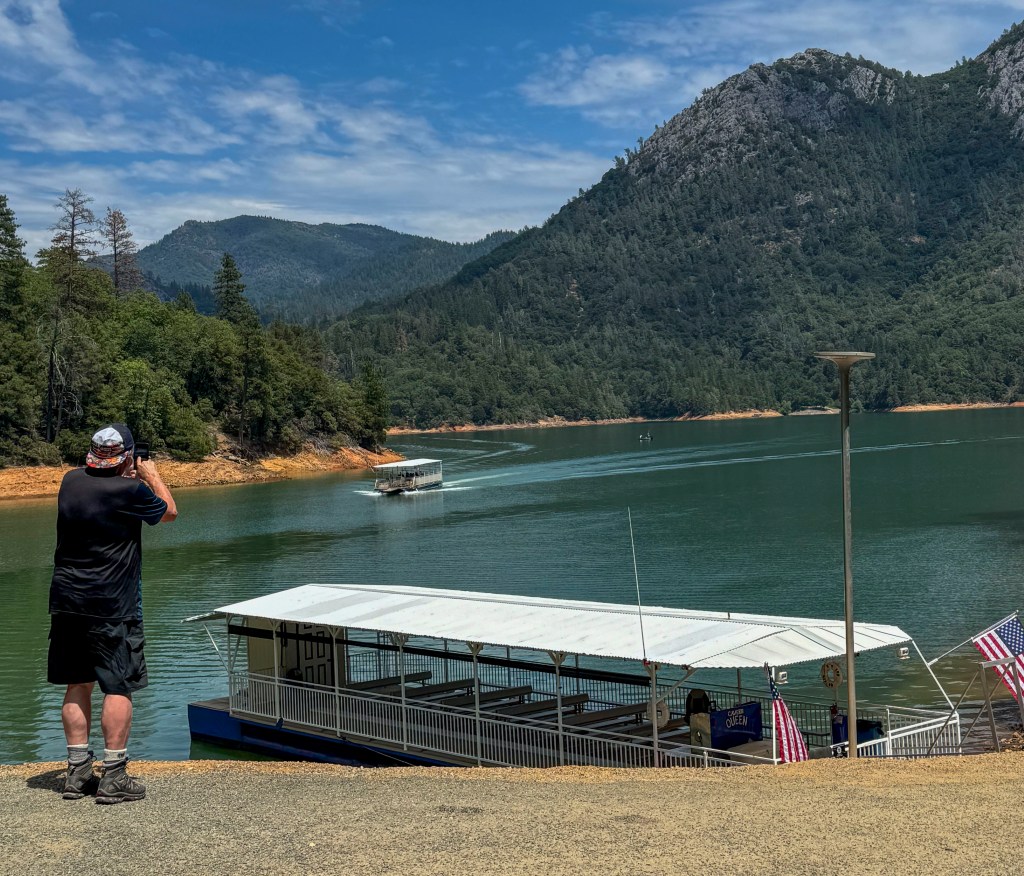
We moseyed about 40 miles down I-5 to Shasta Lake, a large man-made reservoir, beautiful by itself, but also the gateway to some limestone caverns. They can be reached only by boat, here I try to take pictures of the excursion vessel.
RN: Note Felix’s baseball cap turned backwards in the sun and heat. I asked him why he had it turned around since it wasn’t protecting his face from the sun, and he said, “It’s for protecting my red neck!”
Shasta Lake is the largest man-made reservoir in the state of California and it is the third largest body of water behind Lake Tahoe and the Salton Sea. It has 4 major arms and has 365 miles of shoreline and is up to 517 ft deep. When it was created by damming the Sacramento River between 1935-1945, it submerged many village sites of the Wintun people who were in this area for about 10,000 years (Wikipedia).
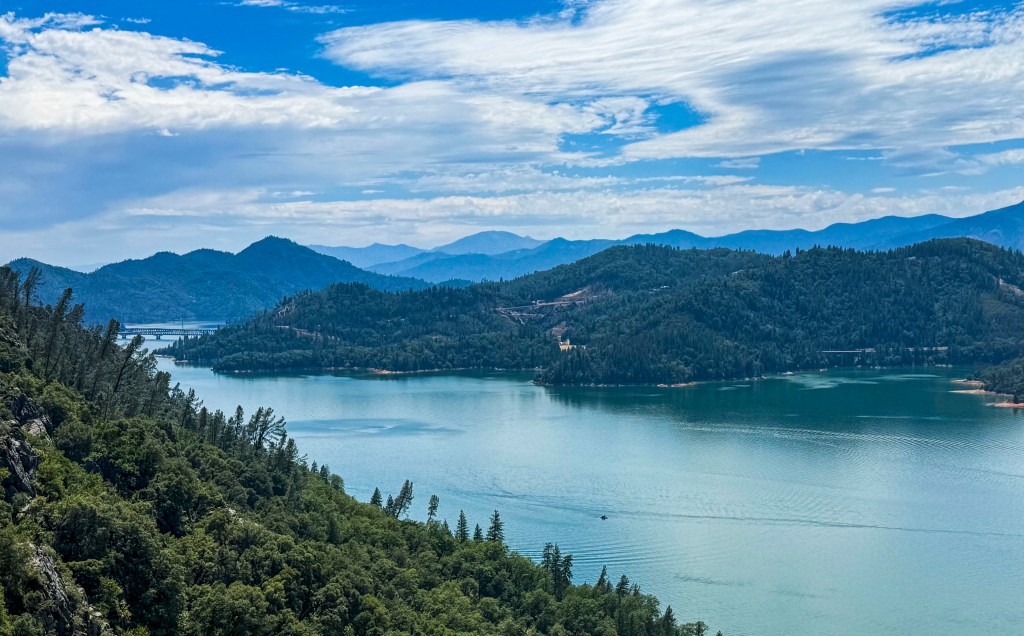
FE: Across the lake then, a short bus ride 800 ft up the mountain, and we arrive at the cavern entrance. The view of the lake from up here is amazing.
RN: Lake Shasta Caverns are at least 200 million years old and were discovered by James A. Richardson, a federal fisheries employee and his signature along with the date (November 11, 1878) are signed on the wall using carbon from his miners lamp. In 1964, a decision was made to open the caverns up to the public by blasting a larger entrance hole, and they discovered that what was called the “Basement Room” was actually an attic with much larger caverns below it (Wikipedia).
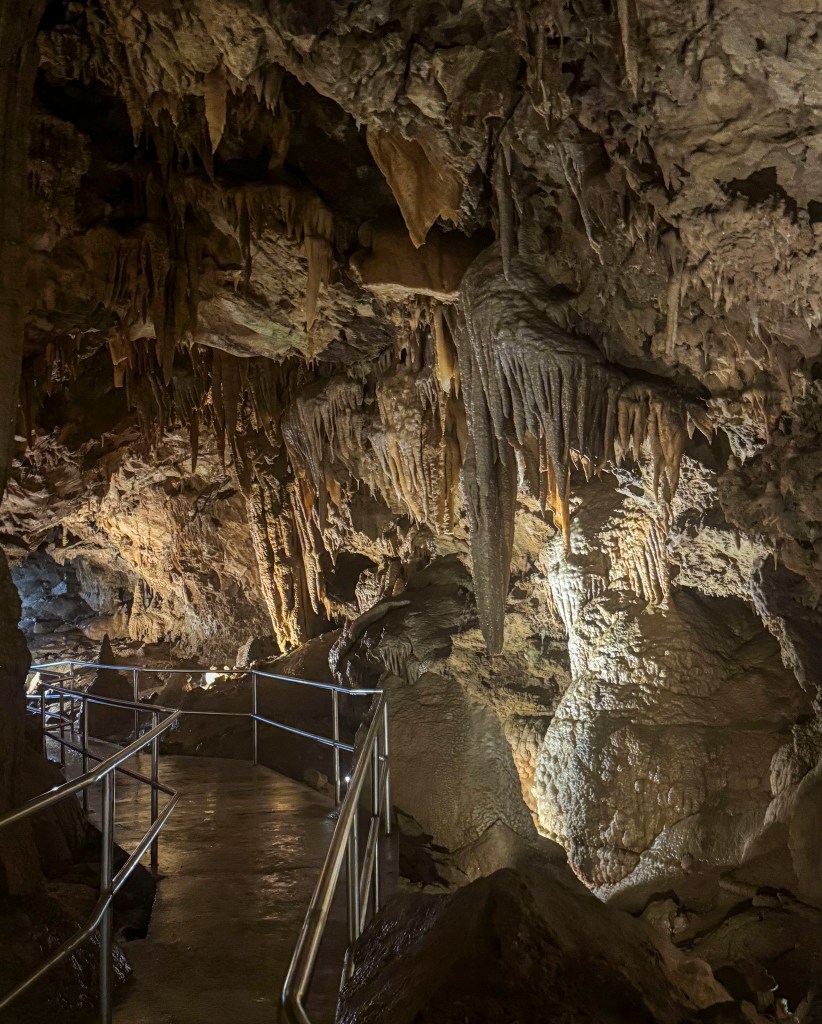
FE: First lesson inside, taking good photos in a cavern is difficult, mostly because all normal proportions are lost. So the best photos have some accidental railings or people in them. Here are the usual stalactites.
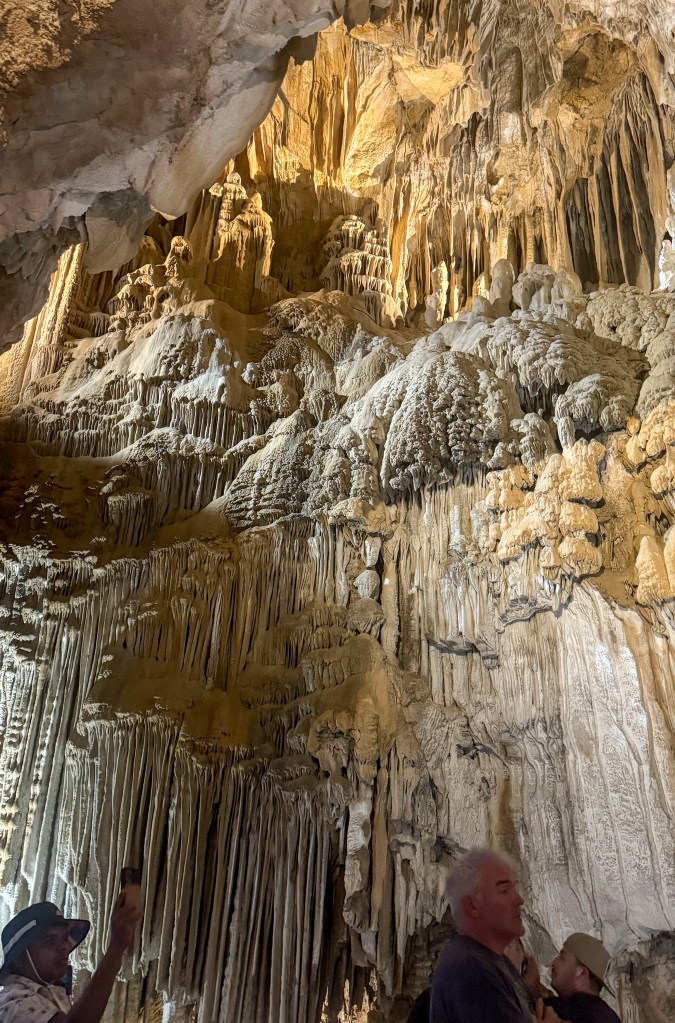
and here is the awesome and aptly named Cathedral Room
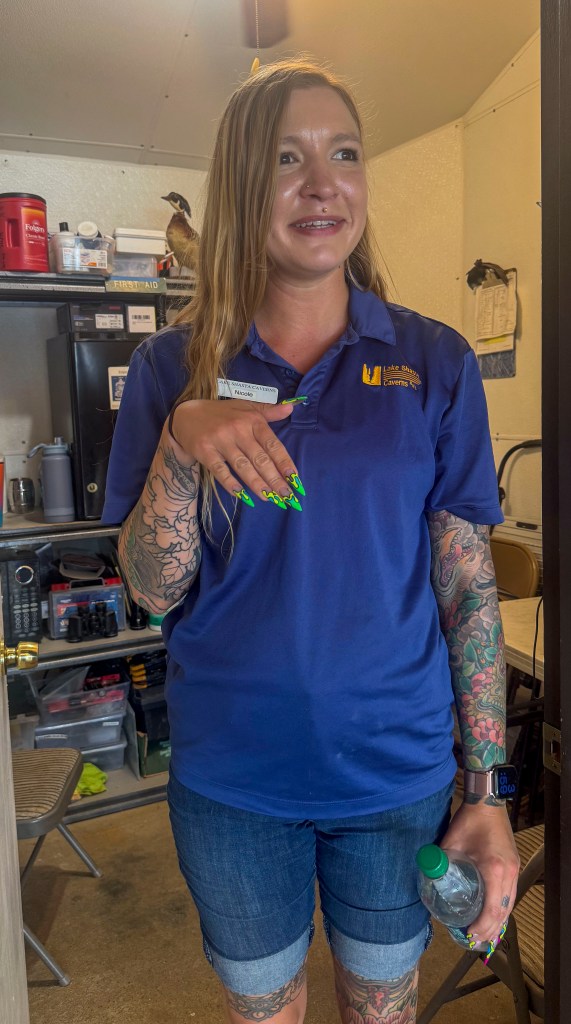
and our knowledgeable guide….what is it with the finger-nails in these parts?
Onwards, we drop down from the mountains into the Central Valley. Electron mileage is great going downhill, our battery retains more charge at the bottom than at the top! Yes, that is right, electric cars can recharge while going downhill (it is called regenerative braking). We make it to Stockton, a convenient stop before Los Angeles.
RN: I told Nicole our guide that I loved her nails and asked to take a photo. I also showed her the nails of our server in Grants Pass and she was really impressed 🙂
 Nishistein 2024 Adventure
I greatly appreciate your including me in your amazing adventure.
LikeLike